


 Özgül Yavuz Kaddoura
Updated Date:
Click Fraud Statistics 2026: Ad Fraud Costs, Bot Traffic and Invalid Clicks
How Much Does Ad Fraud Cost?

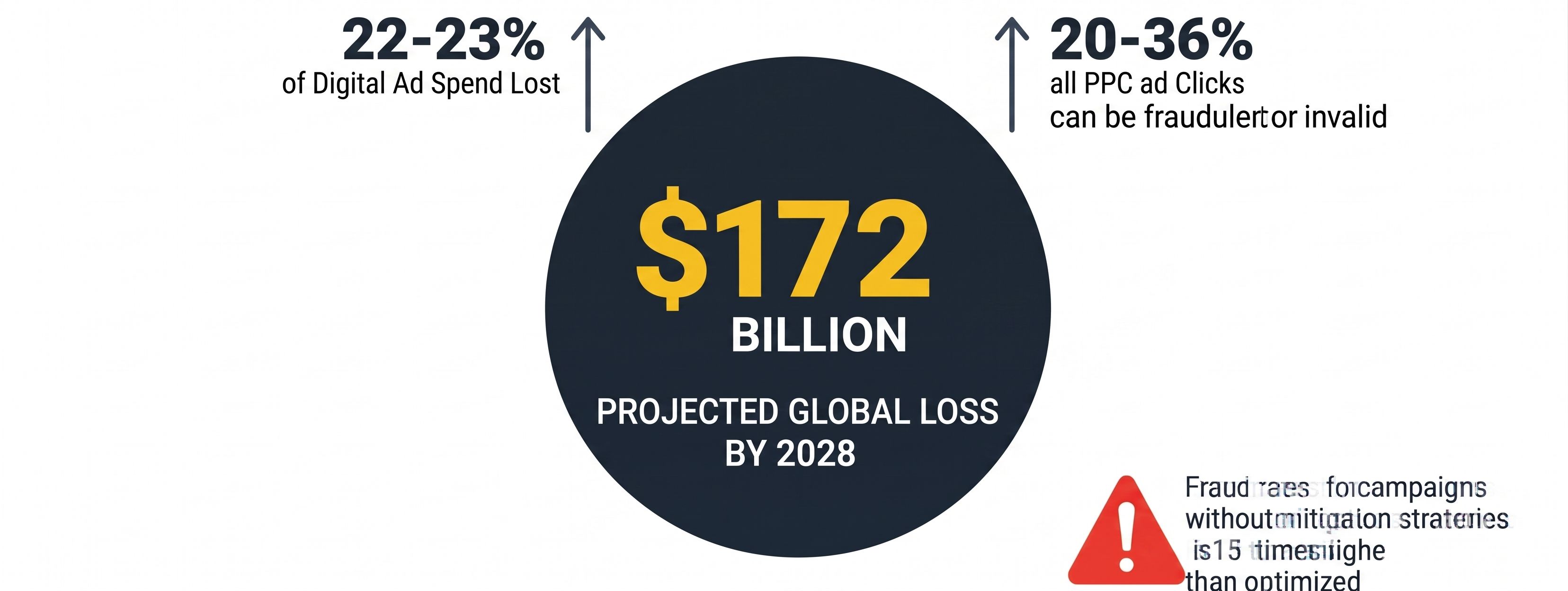
According to Juniper Research, digital advertising fraud cost advertisers an estimated $84 billion in 2023, about 22% of all online ad spend. On mobile, the share was even higher at 30%. Losses are forecast to reach $172 billion by 2028.
Why it keeps growing: even if the share of spend lost to fraud stays roughly stable, the total amount lost keeps rising as overall ad spend increases.
Invalid Traffic Rates by Channel

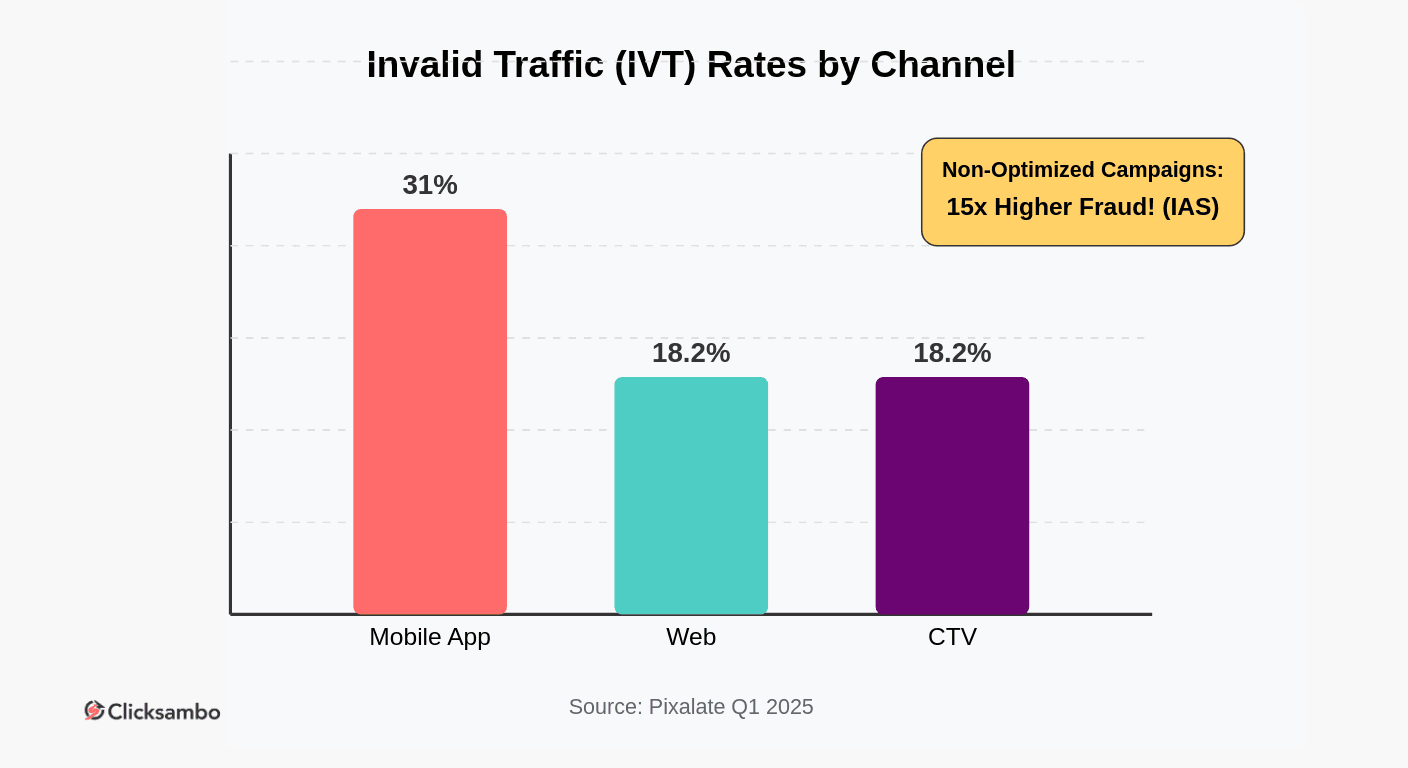
Invalid traffic (IVT) isn't spread evenly. Some channels are far more exposed than others:
| Platform | Invalid traffic (IVT) rate | Key takeaway for marketers |
|---|---|---|
| Mobile apps | 22% | The highest-risk environment; more than 1 in 5 impressions is invalid. |
| Desktop web | 19% | Significant risk remains in traditional browsing. |
| Connected TV (CTV) | 18% | A growing target as high-value CTV budgets increase. |
| Mobile web | 9% | Mobile web | 9% | Lower rate, but still a meaningful share of spend at scale. |
Source: Pixalate, Q1 2025 benchmarks
The Impact of Click Fraud: More Than Wasted Budget
Ad fraud costs more than the money spent on fake clicks. Without PPC fraud protection, the damage spreads to your data, your decisions and your team:
| Impact area | What bot traffic and fraud do | Long-term business result |
|---|---|---|
| Campaign metrics | Inflate clicks, CTR and impressions, and can even create fake leads through bot-filled forms. | Inaccurate data: it becomes much harder to tell which keywords and strategies really work. |
| Optimization decisions | Your decisions, and the bidding algorithms on Google Ads and Meta Ads, rely on contaminated data and false signals. | Budget misallocation: money shifts to underperforming campaigns while profitable ones are underfunded. |
| Return on investment (ROI) | Fraudulent clicks and fake leads don't turn into real customers or sales. | Financial loss: the true return on your marketing spend goes down. |
| Brand reputation | On Display and partner networks, ads can end up on low-quality or fraudulent sites. | Erosion of trust: your brand appears in places that damage credibility with customers and partners. |
| Internal resources | Teams spend hours sifting through suspicious data and investigating discrepancies. | Operational inefficiency: time goes into fixing problems instead of driving growth. |
How to Protect Your Ad Budget in 2026
So how can you protect your campaigns from fake clicks? These are the most effective measures:
| Awareness and education | Train your team to recognize the types and warning signs of click fraud. |
| Regular monitoring and analysis | Review your campaign metrics (CTR, conversion rate, engagement time), traffic sources and placements regularly. Look for sudden spikes and inconsistencies. |
| IP blocking and exclusion lists | Block suspicious IP addresses and known sources of fraudulent traffic. Keep in mind that Google Ads limits how many IPs you can exclude per campaign, and Meta Ads doesn't support IP blocking at all, so manual lists only go so far. |
| Geo and device targeting | Show your ads only in relevant locations and on the devices your target audience actually uses. |
| Negative keywords | Use negative keyword lists to filter out irrelevant searches. This doesn't stop bots, but it keeps low-intent clicks from wasting your budget. |
| Ads.txt-verified inventory | For Display and programmatic campaigns, prefer inventory from sellers authorized through ads.txt and app-ads.txt. These standards help reduce domain spoofing on the publisher side. |
| Click fraud prevention software | A dedicated tool like ClickSambo checks every click on your Google Ads and Meta Ads campaigns automatically and blocks suspicious sources as they appear, which manual methods can't do at scale. |
Effective click fraud prevention software:
| Detects bot traffic and fake clicks in real time. |
| Evaluates multiple signals, including behavior, device fingerprinting and VPN or proxy use. |
| Automatically blocks or flags suspicious activity. |
| Provides clean, reliable data for optimization and decision-making. |
How ClickSambo Protects Your Campaigns
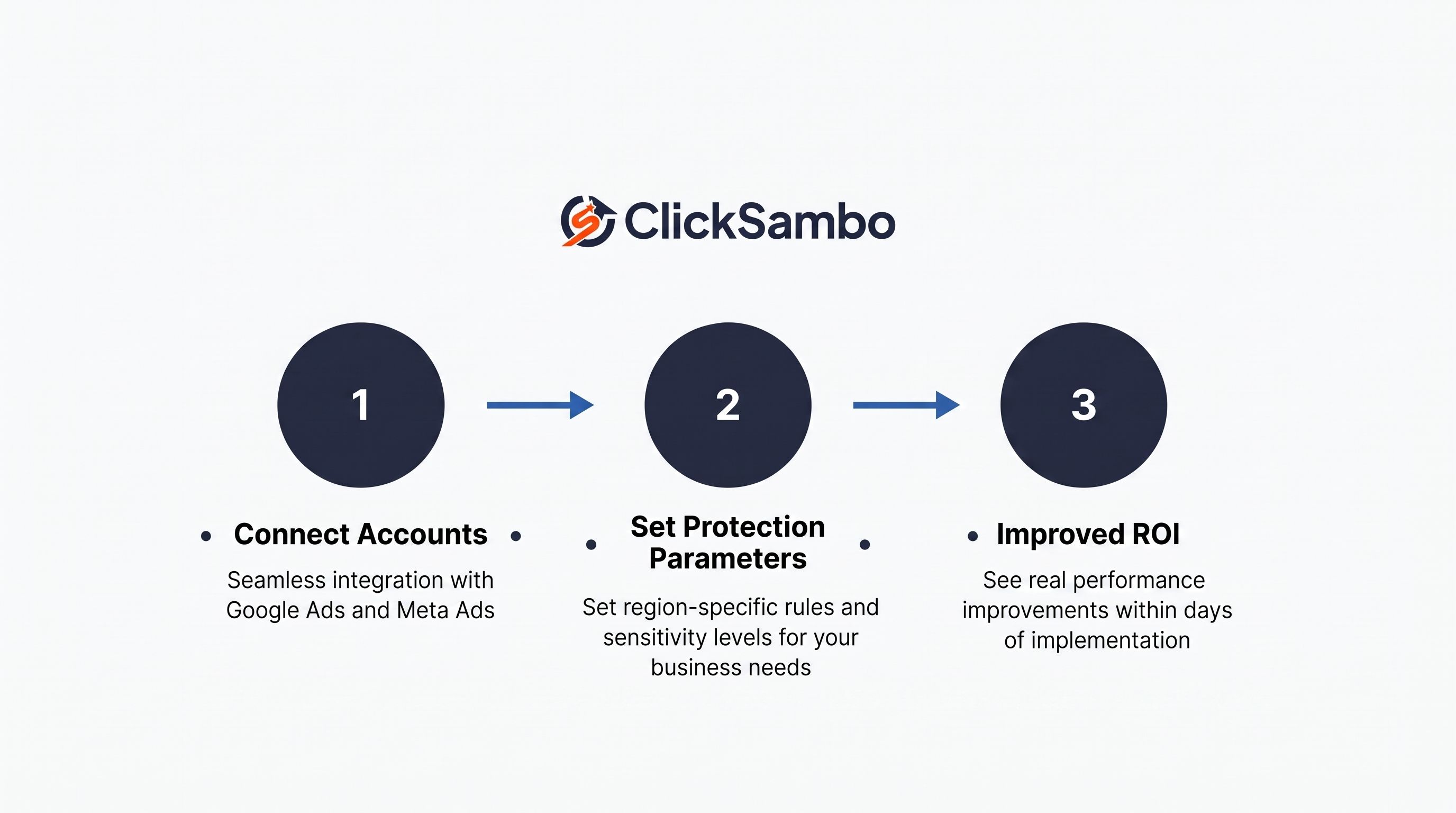
ClickSambo protects your Google Ads and Meta Ads campaigns from invalid traffic and bots. Every click is checked in real time using device fingerprinting, VPN and proxy detection, click velocity thresholds and behavioral AI. On Google Ads, suspicious IP addresses are excluded automatically; on Meta Ads, suspicious traffic is added to an exclusion audience. ClickSambo helps you:
Spend more of your ad budget on real potential customers.
Base your decisions on accurate, reliable campaign data.
Improve your return on ad spend.
Every click and every cent of your ad spend matters. Protect your budget, trust your data and grow with ClickSambo.

Billions in Losses
$172 billion by 2028
Bot Traffic
53% of all web traffic (2026)
Spend Lost to Fraud
22% of online ad spend (2023)
Mobile Apps
22% invalid traffic rate (Q1 2025)Ad fraud costs advertisers billions every year. Protect your Google Ads and Meta Ads budget with real-time click fraud protection.
 Start Free Trial
Frequently asked questions
According to the Thales 2026 Bad Bot Report, bots now account for more than half of all web traffic. For advertisers, this means a growing share of ad clicks may come from automated traffic rather than real people.
Mobile apps have the highest invalid traffic rate of any channel, at 22% according to Pixalate's Q1 2025 data, because apps create opportunities for fraud that don't exist on desktop. Many apps run processes in the background that users never see, and fraudsters use this to generate clicks and impressions without the user's knowledge, known as background clicking. Another common tactic is SDK spoofing, where fraudsters fake the signals an app sends to ad networks to claim installs or clicks that never happened.
Most ad platforms, including Google Ads and Meta Ads, use machine learning to set bids. When bot traffic gets into your data, the algorithm learns from those fake interactions. This is especially damaging when bots fill in forms: the platform treats these fake leads as real conversions and starts bidding more aggressively on the keywords, placements and audiences that produced them. Keeping invalid traffic out of your data helps your bidding strategy focus on people who actually convert.
The global figures are huge, but individual businesses can significantly reduce their own exposure. By combining good campaign settings, such as precise location targeting and negative keywords, with automated protection like IP blocking, device fingerprinting and real-time click monitoring, small businesses can cut wasted spend on invalid clicks and reinvest that budget into reaching real customers.





 Other
Other