


 Erdinç Kaddoura
Updated Date:
What Is Sophisticated Invalid Traffic (SIVT) and How to Block It?
Why Sophisticated Invalid Traffic Matters
Running digital ads? You've probably heard that invalid traffic wastes ad budgets, but sophisticated invalid traffic (SIVT) is the type that slips past basic filters. Unlike simple bots, SIVT is designed to look like real users, inflating clicks, impressions and even conversions. Ad fraud overall cost advertisers an estimated $84 billion in 2023, according to Juniper Research. Understanding SIVT helps you protect your budget and keep your campaign data accurate.
This post explains SIVT in simple terms, the threats it poses and a step-by-step workflow to block it. You'll learn how it differs from general invalid traffic, which red flags to watch for and which free and paid tools can help. By the end, you'll have a plan to clean up your traffic and improve your ROI. Let's break it down.
What Exactly Is Sophisticated Invalid Traffic?

SIVT, or sophisticated invalid traffic, is advanced fake ad activity that's difficult to identify. The Media Rating Council (MRC), which sets industry standards for ad measurement, defines it as invalid traffic that takes advanced analytics or human review to detect. It includes bots and scripts that behave like real people, scrolling pages, moving the cursor over ads and clicking the way humans do. Fraudsters use it to drain budgets on Google Ads, programmatic networks and social media platforms. In the MRC's own words, SIVT covers "more difficult to detect situations that require advanced analytics," while GIVT is "traffic identified through routine means of filtration" (Pixalate, MRC definitions).
General invalid traffic (GIVT), such as known data center bots and crawlers, is relatively easy to filter. SIVT, by contrast, hides behind proxies, VPNs and AI-driven behavior. Common tactics include ad stacking (layering several ads in one slot so only the top one is visible), domain spoofing (posing as premium websites) and click injection (claiming credit for real app installs). Display, mobile and app inventory are hit hardest, and the result is performance metrics that look healthy but don't reflect real interest.
SIVT vs. General Invalid Traffic: Key Differences
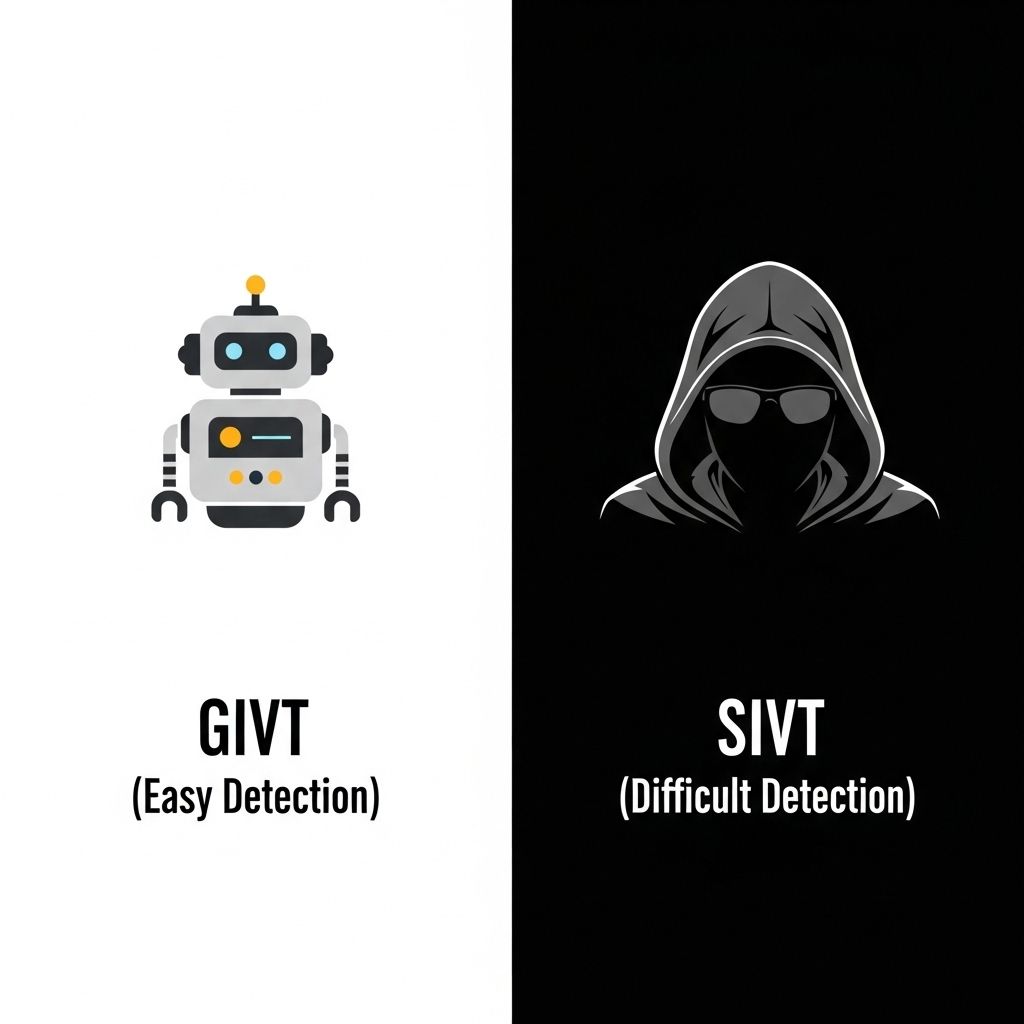
Not all bad traffic is equal. GIVT is the basic kind: known web crawlers, data center traffic and simple bots that standard filters can catch using lists and routine checks. SIVT is the next generation, avoiding those filters by mimicking human behavior through residential IPs, emulators and hijacked devices. ClickSambo helps with click fraud prevention so you can protect your budget from both.
| Type | Detection Ease | Examples | Impact Level |
| GIVT | Easy | Known crawlers, data center traffic, simple scripts | Lower, usually filtered automatically |
| SIVT | Hard | Proxies, botnets, ad stacking, domain spoofing | High, often charged as valid traffic |
SIVT tricks platforms into counting fake impressions and clicks as real, which leads to poor decisions such as overbidding on low-quality traffic.
Why SIVT Hurts Your Business

SIVT doesn't just waste money; it also corrupts your data. Inflated CTRs and ROAS can make a campaign look like a success on paper while real results lag behind. Through domain spoofing, brands can also end up paying for ads that appear on fake or low-quality websites, which can harm their reputation.
In programmatic advertising, SIVT competes for premium inventory, so less of your budget reaches real users. In mobile apps, fake installs eat up user acquisition budgets. Overall, SIVT inflates your conversion baselines, which means automated bidding learns from false signals and optimizes toward the wrong audiences.
In our own Q2 2026 data, 40.1% of tracked Google Ads clicks in Turkey were invalid (ClickSambo Invalid Click Report). Across 2.7 billion paid clicks worldwide, invalid traffic averaged 5.21% on Google Search but 20.62% on Google Video (Advanced Television, 2026).
Common Types of SIVT to Watch For

Fraudsters get creative. Here are the most common types:
| Type | How It Works | Example |
| Ad Stacking | Several ads are layered on top of each other in a single ad slot. | Only the top ad is visible, but every advertiser in the stack is charged for an impression. |
| Domain Spoofing | Low-quality sites pretend to be well-known publishers. | You think you're buying space on a major news site, but your ad runs on a junk page. |
| Click Injection | Malicious apps fire a fake click just before a real app install finishes. | The fraudster takes credit for an install that would have happened anyway. |
| AI-Powered Bots | Bots imitate human actions like scrolling, cursor movement and form filling. | Sessions that look real in analytics but never turn into customers. |
These tactics are especially damaging in high-value markets such as finance and e-commerce, where each fake click or impression costs more.
Red Flags Signaling SIVT in Your Campaigns

Watch for these signs to catch SIVT early:
➔ Sudden traffic spikes from unusual locations or at odd hours.
➔ A high click-through rate with few conversions, or sessions that end within seconds.
➔ Impressions on unknown domains or low-quality publishers.
➔ Repeated clicks or sessions from the same device, even when the IP address changes.
Check the "Invalid clicks" columns in Google Ads too, but keep in mind they only show what Google has already filtered. SIVT that slips through won't appear there, which is why a dedicated detection tool adds an important extra layer.
How to Block SIVT: A Step-by-Step Guide

You don't need to panic: a layered defense works well against SIVT. Start simple, then scale up as your spend grows. The goal is to protect your campaigns from threats like ad fraud botnets before they distort your results.
| Step | What to Do | How |
| Use Platform Built-Ins | Rely on Google Ads' automatic invalid traffic filtering as your first layer. | Add IP exclusions for suspicious ranges and review them weekly. Microsoft Advertising and Meta also filter invalid activity automatically and offer their own exclusion settings. |
| Monitor in Real Time | Use analytics dashboards like Google Analytics to spot anomalies. | Look for sessions that end within seconds or show no engagement. Session replay tools such as Hotjar can help you see how suspicious visitors actually behave. |
| Deploy Behavioral Analysis | SIVT struggles to copy the finer details of human behavior. | Machine learning can analyze session patterns, interaction timing and repeated device signals to separate bots from real visitors. |
| Block at the Source | Exclude data center, VPN and proxy traffic using IP intelligence databases. | In programmatic buying, only buy from authorized sellers listed in ads.txt and sellers.json (IAB Tech Lab standards), and use pre-bid filtering offered by DSPs and verification partners. |
Invest in Fraud Protection Tools
Third-party tools add the detection layer platforms can miss. ClickSambo is built for PPC campaigns on Google Ads and Meta Ads, automatically excluding fraudulent IPs using device fingerprinting, VPN/proxy detection and behavioral AI. For programmatic and CTV buying, also work with MRC-accredited verification vendors.
Audit and Test Regularly
Run a controlled test: compare a campaign with fraud blocking turned on against a similar one without it, and measure the difference in conversion rate and cost per conversion. For programmatic buying, work with MRC-accredited verification vendors to align with industry standards.
Advanced Strategies for Enterprises
Scale with:
➔ Custom fraud models trained on your own data in BigQuery.
➔ Server-side tracking to keep measurement reliable as third-party cookies fade.
➔ Team training based on TAG and IAB fraud guidelines.
Treat fraud protection as a standard part of your ad budget. For larger accounts, enterprise-level protection can be tailored to your setup.
Final Thoughts: Take Control Today
Protecting your advertising budget and data starts with understanding sophisticated invalid traffic (SIVT) and responding to it. Once you know how SIVT differs from general invalid traffic and recognize the common fraud tactics, you can put effective strategies in place to limit its impact. Combine built-in platform protections, real-time monitoring and behavioral analysis to keep your campaigns safe from this growing threat. With the right tools and expertise, businesses can improve their return on ad spend and make sure their campaigns reach real audiences. ClickSambo makes click fraud protection simple: start your free trial, or follow us on LinkedIn for the latest updates.
For the techniques advanced bots use to stay hidden, read how sophisticated click bots evade detection.
Basic filters miss bots that mimic real users. ClickSambo combines device fingerprinting, VPN/proxy detection and behavioral AI to stop sophisticated invalid traffic.
 Start Free Trial

Frequently Asked Questions
Why don't standard ad platform filters catch SIVT?
Standard filters are mainly designed to catch general invalid traffic (GIVT), such as known data center bots or accidental double-clicks. SIVT is built to get past these filters by using residential proxies, which make bots look like home users, and human-like behavior such as natural cursor movement and scrolling. Because SIVT tactics keep changing, an extra detection layer like ClickSambo helps catch what platform filters miss, using device fingerprinting, VPN/proxy detection and behavioral AI.
How does SIVT "burn my data" beyond just wasting my ad budget?
SIVT is dangerous because it pollutes your conversion signals. When sophisticated bots engage with your ads—or even trigger fake form fills—your platform's AI (like Smart Bidding) assumes these are high-quality users. Consequently, the algorithm begins to optimize your campaigns toward more bots, creating a destructive feedback loop that makes your data unreliable for future decision-making.
What is the difference between ad stacking and domain spoofing?
Both are common SIVT tactics, but they work differently. Ad stacking happens when a publisher layers multiple ads on top of each other in a single ad slot. Only the top ad is visible, yet every advertiser in the stack is charged for an impression. Domain spoofing is more deceptive: a low-quality site poses as a well-known premium publisher in the ad exchange, so you pay premium prices for low-quality placements. Buying only from sellers listed in ads.txt and sellers.json helps reduce this risk.
Is SIVT a problem for small businesses too?
Enterprises lose more in total, but SIVT is often harder on small and mid-sized businesses. Smaller advertisers usually work with tighter margins and have less data to absorb the impact of fake traffic. Even a modest share of invalid clicks can be the difference between a profitable campaign and a losing one. Putting real-time protection in place early helps more of your limited budget reach real potential customers.