


 Özgül Yavuz Kaddoura
Updated Date:
How Better Ad Measurement Drives Real Business Results
Activity vs. Results: Why Ad Measurement Matters

Advertisers track more data than ever: clicks, impressions, click-through rates and dozens of other ad performance metrics. But there's an important question behind all those numbers: are you measuring activity, or results? Better ad measurement is what separates a campaign that only looks busy from one that is genuinely profitable.
Clean data matters as much as the right metrics. According to Juniper Research, about 22% of all online ad spend was lost to fraud in 2023. Without click fraud protection, part of the data you use to make decisions may come from bots and fake clicks. In this guide, we cover the metrics that really matter, how fake traffic distorts them and how to measure the true impact of your campaigns.
Beyond Vanity Metrics: The KPIs That Actually Matter
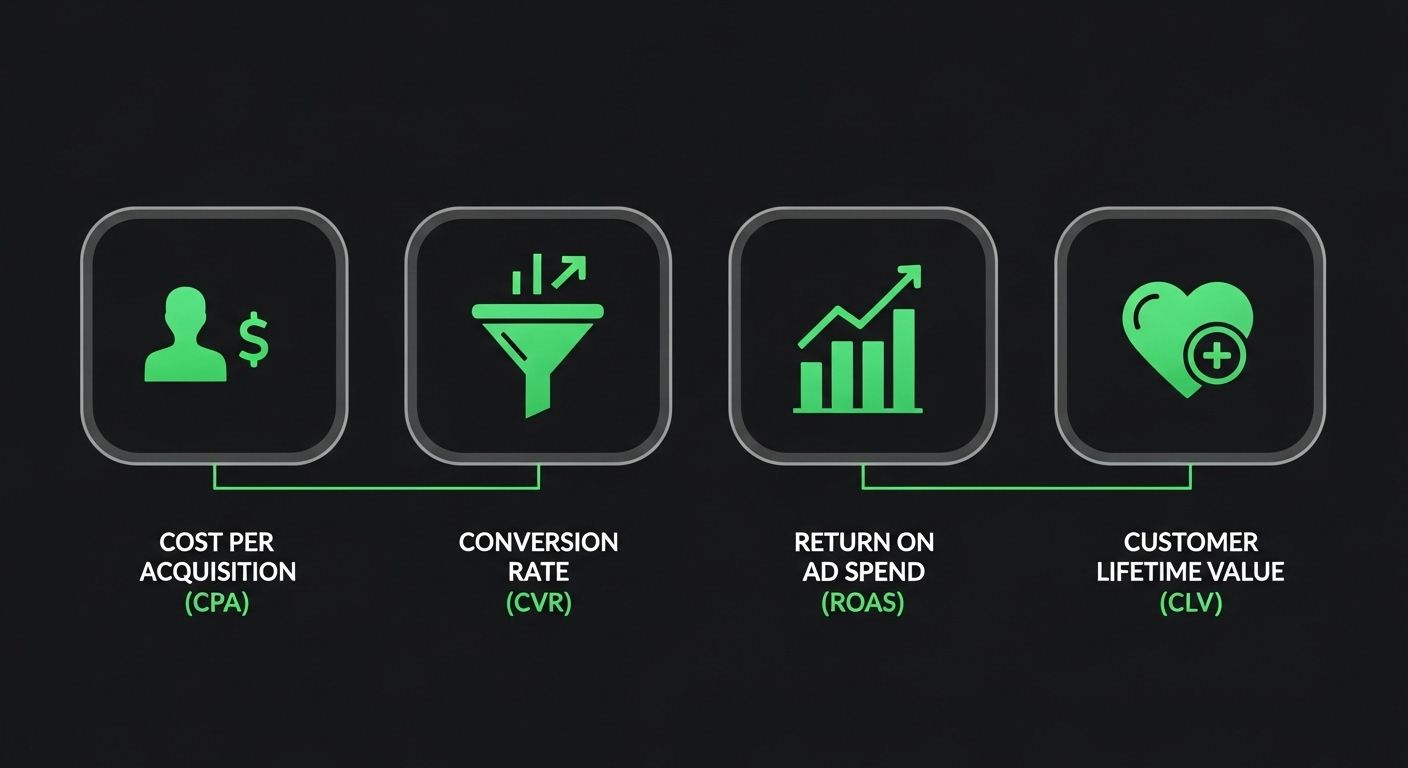
Many advertisers get trapped chasing vanity metrics. High impression counts and a low Cost-Per-Click (CPC) look great on a report, but they don't pay the bills. To achieve real business results, you need to focus on Key Performance Indicators (KPIs) that are directly tied to revenue and profitability.
| Metric | Full Name | Why It’s Your "North Star" |
| CPA / CPL | Cost Per Acquisition / Lead | Tracks the actual cost to gain a paying customer or qualified lead. A low CPC means nothing if this number is too high. |
| CVR | Conversion Rate | Measures the % of clickers taking action. It reveals traffic quality and how well your landing page performs. |
| ROAS | Return on Ad Spend | The ultimate financial success measure: for every $1 spent on ads, how many dollars do you earn in revenue? |
| CLV | Customer Lifetime Value | Identifies campaigns that bring in high-value, long-term customers rather than just one-time buyers. |
How Ad Fraud Distorts Your Measurement
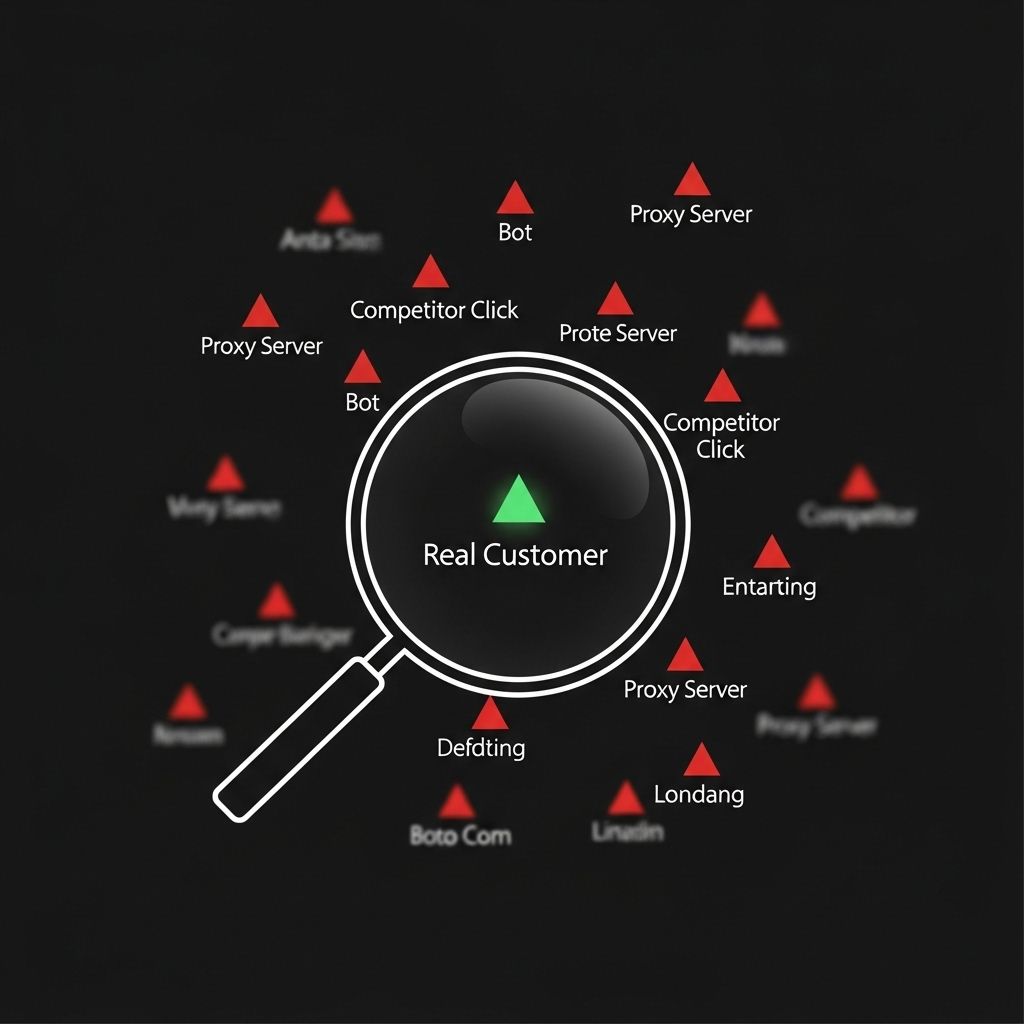
When bots and competitors click your ads, the damage spreads across your campaigns:
| Higher cost per result | You pay for clicks that will never convert, so your cost per acquisition rises even if your cost per click stays the same. |
| Skewed analytics | Click-through rates and traffic look higher than they really are, making weak campaigns seem successful. |
| Wasted retargeting | Bots that visit your site end up in your remarketing audiences, so you keep paying to show them ads. |
| Misled algorithms | When bots trigger conversions, Smart Bidding and Meta's algorithm learn from fake data and start looking for more of the same traffic. |
How to Improve Your Ad Measurement

Better measurement starts with two habits: counting the right conversions and checking your traffic for signs of fraud.
1. Track conversions that reflect real revenue
Form fills alone don't tell you which clicks turned into customers. Use offline conversion tracking or a CRM integration to send Google Ads data on leads that actually became paying customers, and track call conversions if phone calls drive your sales. On Meta, send qualified leads and purchases back through the Conversions API. This bottom-of-funnel data teaches Smart Bidding and Meta's algorithm to find buyers, not just clickers, and it makes fake leads far less influential.
2. Segment your data to spot invalid traffic
Break down your results to find sophisticated invalid traffic (SIVT) hiding in your averages:
| Location | Look for click spikes from regions outside your service area. |
| Device and time | Watch for unusual traffic from specific device types or at hours when your customers are usually offline. |
| Placements | In Display, Performance Max and Meta's Audience Network, find apps and sites with many clicks but no conversions. |
| Audiences | Identify audience segments with high clicks but no engagement or conversions. |
How ClickSambo Keeps Your Data Clean
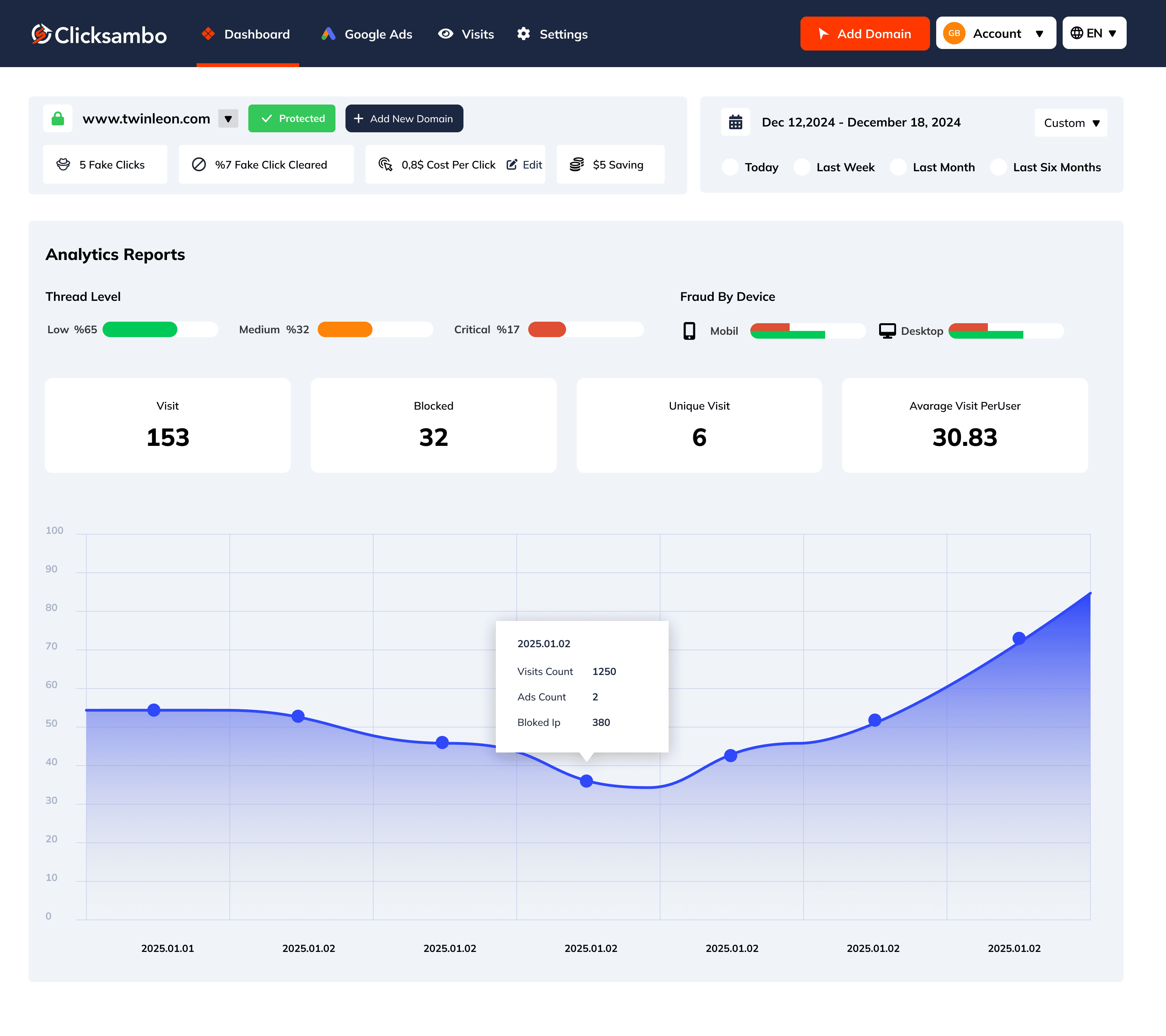
Real-time protection: ClickSambo checks every click on your Google Ads and Meta Ads campaigns as it arrives, using device fingerprinting, VPN and proxy detection, click velocity thresholds and behavioral AI. Suspicious sources are blocked automatically: on Google Ads, their IPs are excluded and fraudulent visitors are sent back as negative signals; on Meta Ads, suspicious traffic is blocked from reaching your campaigns. Because repeat offenders can't keep clicking, less fake traffic reaches your analytics and bidding data over time.
Visit analytics: Your dashboard shows where invalid traffic comes from, so you can act on it:
| Location analysis | See which regions send suspicious clicks and exclude locations that don't bring real customers. |
| Keyword insights | Find out which keywords attract invalid traffic and which bring real buyers, so you can refine bids and negative keywords. |
| Session behavior | Compare how real visitors and suspicious sessions behave on your site to understand where fake traffic hides. |
| Custom thresholds | Set your own click limits per device or IP address and manage all your accounts from one dashboard. |
Clicks only matter if real people make them. Block fake traffic on your Google Ads and Meta Ads campaigns and base your decisions on real customer data.
 Start Free Trial
Frequently asked questions
Because fake clicks mix with real ones in every report. When part of your traffic comes from bots and competitors, your cost per acquisition (CPA) looks higher and your conversion rate looks lower than they really are for genuine visitors. That can lead you to cut campaigns that actually work. And when bots also submit forms, the opposite can happen: fake leads make a weak campaign look successful. Click fraud protection reduces this noise, so your metrics reflect real customer behavior more closely.
Activity metrics, often called vanity metrics, such as clicks, impressions and click-through rate, show that your campaign is busy, but not that it's profitable. Result metrics, such as cost per acquisition, return on ad spend (ROAS) and customer lifetime value (CLV), show what your ads actually earn. Activity metrics are still useful for diagnosing problems, but decisions about budget should be based on results. Blocking fake clicks with a tool like ClickSambo helps keep both kinds of metrics closer to what your real customers are doing.
Google's Smart Bidding and Meta's algorithm learn mainly from your conversions. Bots that only click waste budget, but the bigger problem starts when they also trigger conversions, for example by filling in lead forms or adding items to a cart. The algorithm treats these fake conversions as real customers and starts looking for more people like them, gradually shifting your budget toward low-quality traffic. To prevent this, count only meaningful actions as conversions, send back qualified leads and sales through offline conversion imports or the Conversions API, and use bot traffic detection to block fake sources. ClickSambo also sends detected fraudulent visitors to Google as negative signals, so the algorithm learns to avoid them.
Yes. ClickSambo works alongside the analytics tools you already use, such as Google Analytics, your CRM or BI dashboards. It connects to your Google Ads and Meta Ads accounts and checks every ad click in real time. By blocking suspicious sources, it reduces how much sophisticated invalid traffic reaches your site over time, so the data flowing into your other tools becomes cleaner. Its own dashboard adds the details your analytics tools don't show, such as which clicks were blocked, from which locations and keywords, and why.



 Other