


 Özgül Yavuz Kaddoura
Updated Date:
The Agentic Shift: Google's 2026 ALF & UCP Updates
From Automation to Autonomy
We have officially exited the era of "Automated Marketing" and entered the age of Agentic Marketing. The launch of Google's ALF (Advertiser Large Foundation Model) and the Universal Commerce Protocol (UCP) in early 2026 signals a fundamental shift in the digital ecosystem. For years, marketing professionals managed keywords and bids. Now, we manage signals and AI agents.
In this transformed landscape, the technology stack you use determines whether you thrive or disappear. As Google’s AI becomes the primary buyer and seller, the integrity of your data—specifically your ads analytic feeds and click fraud defense—becomes the fuel that powers your growth. This article dissects the massive technological leaps of 2026 and outlines a survival guide for the modern marketer.
ALF and the "Unified Representation" of Brands
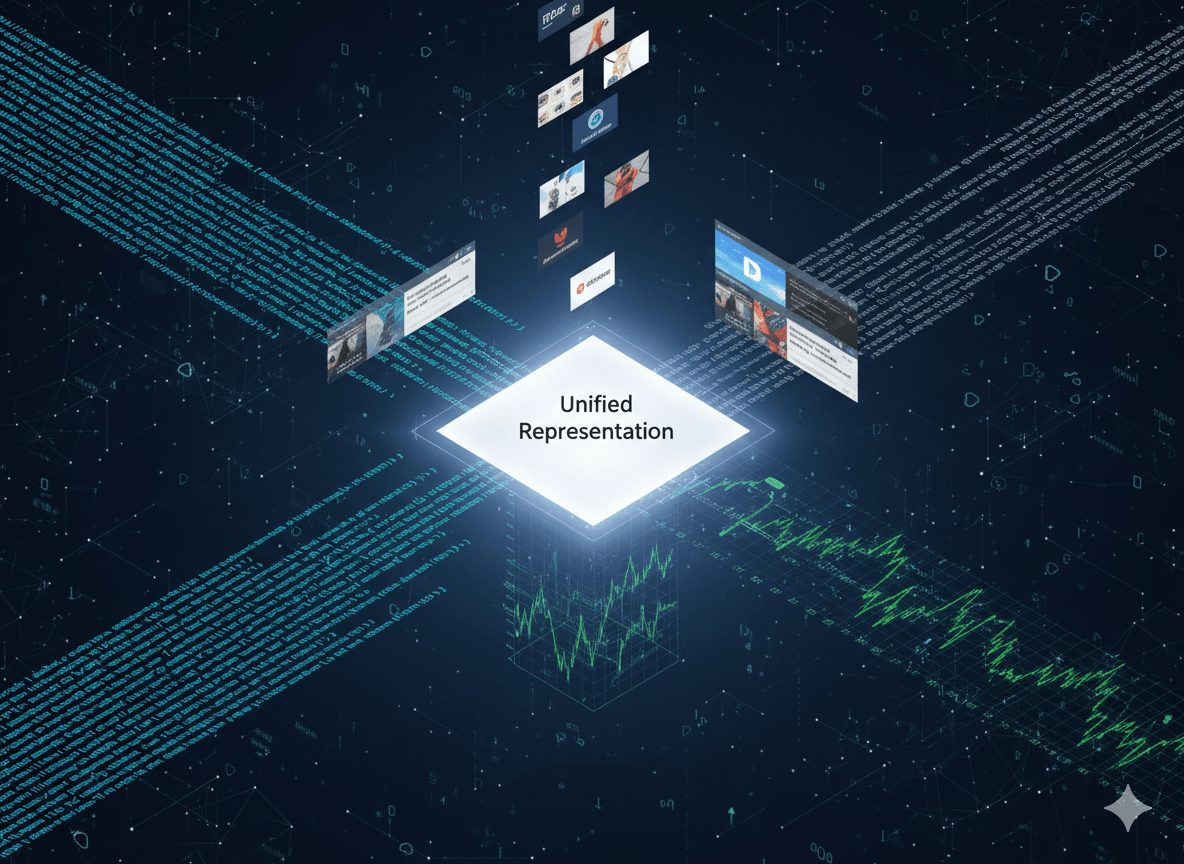
The deployment of ALF (Advertiser Large Foundation Model) is arguably bigger than the introduction of PMax. ALF is a multimodal foundation model that doesn't just "read" your ads; it understands your business's soul. It analyzes text, images, video, and billing history simultaneously to create a "Unified Representation" of your brand.
The Impact on Marketing Strategy
For marketing teams, ALF demands consistency. You can no longer run disjointed campaigns. ALF looks for alignment between your creative assets and your landing page reality.
The Trust Score: ALF assigns a trust vector to your account. If your signals are clean, you get premium inventory.
The Risk: If your ads analytic data shows erratic behavior—often caused by unchecked bot traffic or click fraud—ALF may flag your account as an outlier. In an AI-governed world, being an outlier is expensive. Protecting your traffic quality is no longer just about saving budget; it's about training Google's AI to trust you.
Universal Commerce Protocol (UCP): The End of the "Click"
Perhaps the most disruptive update of 2026 is the Universal Commerce Protocol (UCP). As detailed by Google, this open standard allows AI agents to negotiate and complete purchases on behalf of users, often without them ever visiting your website.
Imagine a user telling their AI: "Buy me the best running shoes for flat feet under $150." The AI uses UCP to find the product, negotiate the price using Direct Offers, and execute the transaction.
The Marketing Challenge: In this scenario, traditional marketing funnels collapse. You aren't optimizing for a human click; you are optimizing for an AI's decision logic.
Data Integrity: If your ads analytic reports are inflated by click fraud (bots that mimic high intent), you might optimize your pricing and inventory for a phantom audience. To win in the UCP era, your performance data must reflect genuine human demand, ensuring your "Business Agent" is trained on reality, not noise. Learn more about how advanced detection techniques secure this data.
The Power Pack: Marketing's New Engine

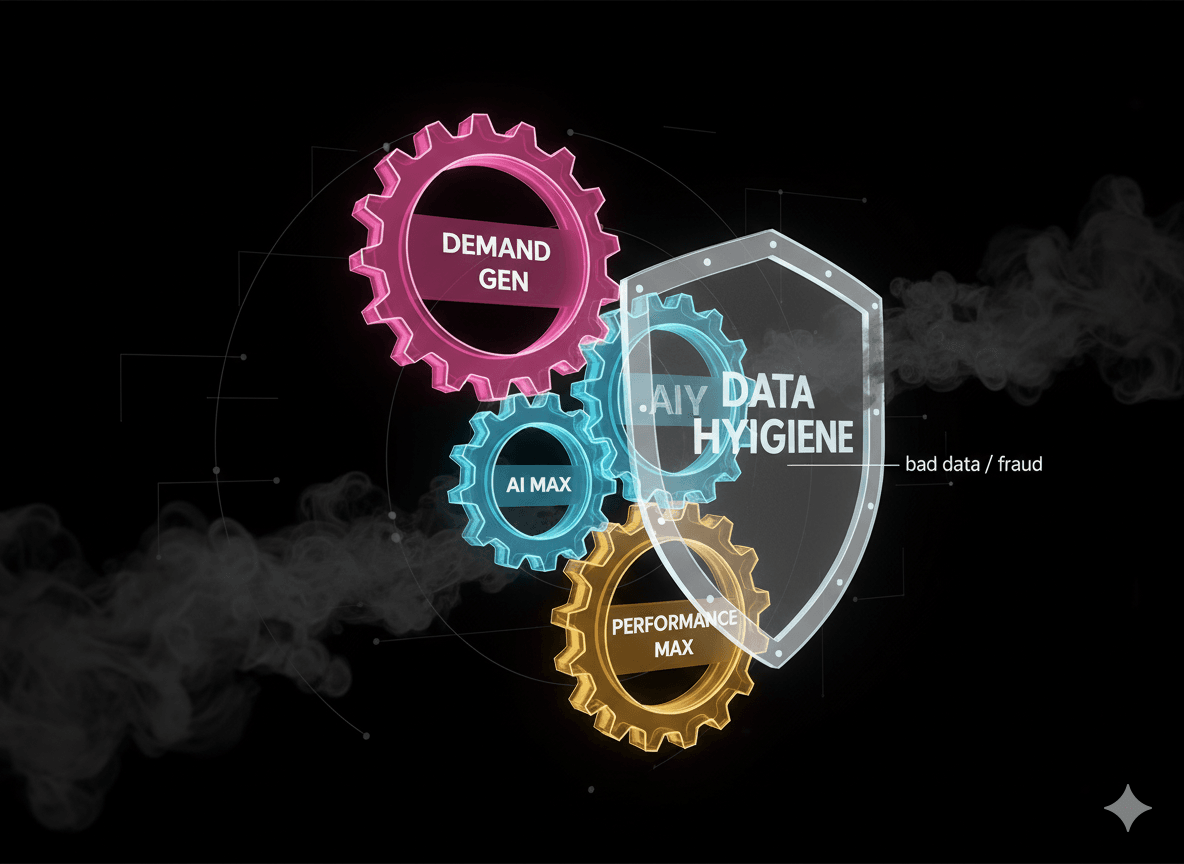
Google has retired the "Power Pair" concept in favor of the Power Pack: a triad of Demand Gen, AI Max, and Performance Max. Industry experts highlight this shift as critical for 2026.
| Demand Gen | Creates desire using visual storytelling on YouTube and Discover. |
| AI Max for Search | Captures intent using Nano Banana 4 generative models to rewrite ads in real-time. |
| Performance Max | Orchestrates the conversion, now equipped with "High Value Mode" to prioritize LTV. |
Marketing in 2026 is about ensuring these three systems talk to each other. However, this automation has a vulnerability. Automated bidding algorithms (Smart Bidding) are voracious consumers of data. If click fraud infiltrates your Demand Gen campaigns, it poisons the well for PMax. The system learns to optimize for bots. Using a signal purification layer like ClickSambo ensures that only high-quality signals feed the Power Pack, stabilizing your ads analytic insights.
Meridian: Truth in Measurement

With the demise of cookies, Google launched Meridian, an open-source Marketing Mix Modeling (MMM) tool. Meridian uses Bayesian statistics to tell you what actually drove revenue.
The Analytics Revolution: Meridian doesn't track users; it models causality. This is the future of ads analytic measurement.
The Garbage In/Garbage Out Problem: MMMs are sensitive. If 15-20% of your input data is invalid traffic (click fraud), your model's output will be statistically flawed. To get a true read on your marketing ROI with Meridian, you must scrub the data input stream before it enters the model.
The "Signal-First" Strategy

The technology of 2026—from ALF to UCP—has made digital marketing more powerful but less forgiving. The winners will not be those with the best ad copy (AI writes that now), but those with the best data.
Your strategic imperative is "Signal Liquidity." You must ensure that every signal sent to Google—every conversion, every engagement—is authentic. By eliminating click fraud and relying on pristine ads analytic, you empower Google's agentic tools to work for you, not against you. In the age of AI, clean data is the ultimate competitive advantage.
As Google shifts to Agentic AI, fraud evolves. Secure your future campaigns with ALF-compatible defense.
 Get 2026 Ready
Frequently asked questions
ALF (Advertiser Large Foundation Model) is Google's new multimodal AI that analyzes text, video, and billing history to detect fraud and policy violations. For advertisers, it means maintaining a high "Trust Score" and consistent behavior is crucial to access premium inventory.
The Power Pack (Demand Gen, AI Max, PMax) relies heavily on automated bidding. If click fraud infiltrates your funnel, these algorithms learn from bad data, optimizing your budget for bots instead of real customers. Clicksambo filters this data before it reaches Google's AI.
UCP allows AI agents to complete purchases directly on behalf of users, often without visiting a website. This shifts marketing from "attracting clicks" to "optimizing data" so that AI agents choose your product as the best answer.
Yes. Meridian uses Bayesian statistics to measure ROI. If your input data contains 15-20% invalid traffic (fraud), the model's output will be flawed. Clicksambo ensures only clean, human data feeds into your measurement models for accurate results.





 Other
Other