
 Features
  Industry Verticals
  Customer Segments
  Fraud Types
  Resource
 About
About  Legal
Legal Support

 Özgül Yavuz Kaddoura
GCLID & Click Fraud: Your Guide to Accurate Tracking
As a digital marketer, you live and breathe Digital Advertising Analytics, so Google Ads tracking is a very important part of your daily business. You meticulously track every campaign using parameters like gclid, wbraid, and gbraid to measure performance, attribute conversions, and optimize your ROI. But here’s the critical question: What happens when the clicks generating these tracking IDs are the result of Google Ads Click Fraud?
What Are Gclid, Wbraid, and Gbraid?
gclid (Google Click Identifier): This is the most common and powerful one. It’s the handshake between Google Ads and Google Analytics. When auto-tagging is on, every click on your ads gets a unique gclid. This allows you to see exactly which campaign, ad group, keyword, and ad led to a specific user session, and ultimately, a conversion.
wbraid & gbraid (Web/Google Browser Click ID): These are Google's answer to a more privacy-focused internet, especially after changes like Apple's iOS 14 update which limited traditional tracking. They are designed to measure conversions from app-based platforms (like YouTube or other apps in the Google network) where standard cookies don't work as well. They help attribute conversions back to your campaigns even without third-party cookies.
Why These IDs Are Non-Negotiable?
They Power Smart Bidding: Automated bidding strategies like "Maximize Conversions" or "Target CPA" are not magic. They are AI models that are entirely dependent on conversion data. The gclid is the "fuel" for this AI, telling it exactly which clicks resulted in a valuable action. Without accurate gclid data, these powerful bidding strategies are effectively blind.
They Enable Offline Conversion Tracking: Did a lead from your website later make a purchase over the phone or in person? With the gclid captured in your CRM, you can upload that sales data back into Google Ads. Google then matches the gclid and attributes a real-world sale back to the specific keyword and ad that started the journey. This is impossible without it.
They Provide Granular Attribution: These IDs allow you to move beyond simply knowing you got a conversion. They tell you which specific keyword, ad copy, audience segment, and device was responsible. This level of Traffic Source Analysis gives you the granular data needed to make intelligent decisions—like allocating more budget to your top-performing keywords or pausing underperforming ads.
How Click Fraud Hijacks Your Tracking IDs?
Here is the billion-dollar problem: Bots and fraudulent users also generate gclids.
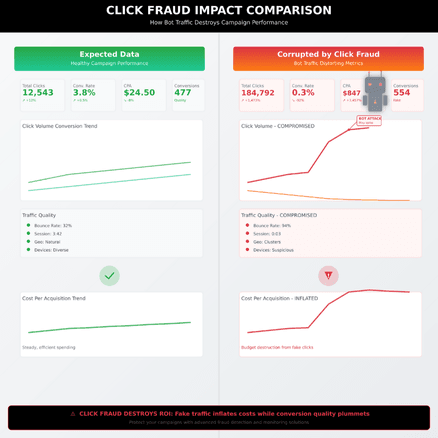
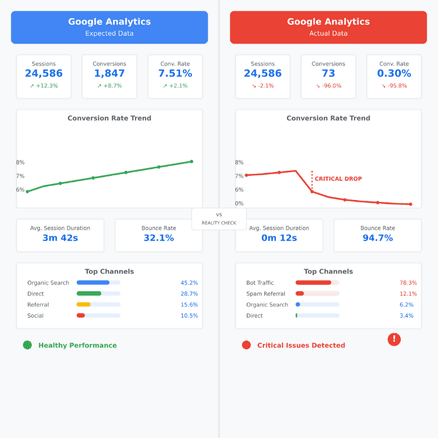
Your Analytics Fill with Ghosts: Your Google Analytics account registers thousands of sessions of Fake Traffic To Website, each with a valid gclid. On paper, your campaign looks incredibly busy.
Metrics Become Meaningless: Your Click-Through Rate (CTR) soars, but your conversion rate collapses to near-zero because bots don't buy products or fill out forms. Your Cost Per Acquisition (CPA) skyrockets because your spend increases with no new customers.
You Optimize for Bots: Seeing the high click volume, you (or worse, Google's Smart Bidding) might allocate more budget to the fraudulent campaigns, keywords, or placements, effectively feeding more money directly to the fraudsters.
Filtering Your Traffic Before It Gets Tracked
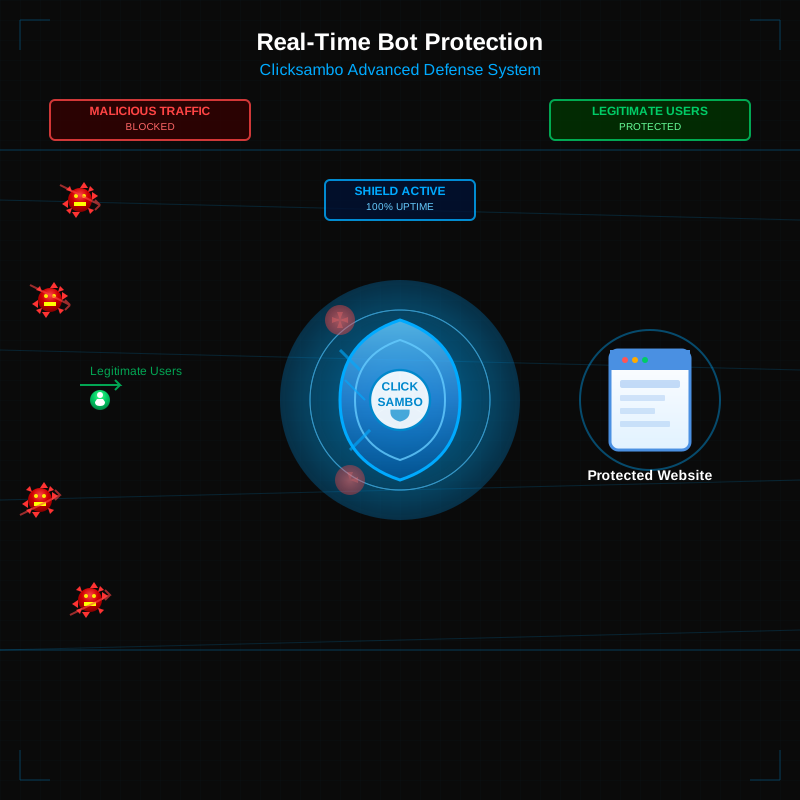
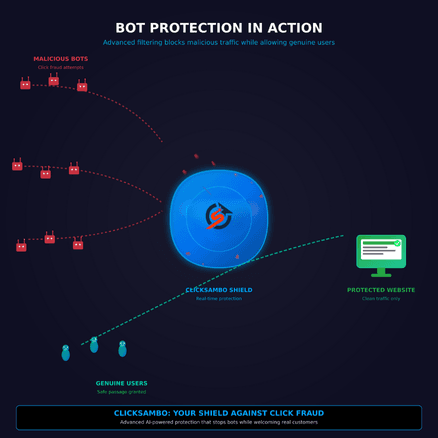
Real-Time Bot Blocking: ClickSambo uses advanced Bot Traffic Detection and behavioral analysis and device fingerprinting to identify automated bots the moment they click. We block them instantly, so they never reach your site and never generate a fraudulent session in your analytics.
Ensuring Data Integrity: By filtering out all invalid traffic, we guarantee that every gclid, wbraid, and gbraid that appears in your Google Analytics comes from a genuine, human visitor.
Enabling Smarter Optimization: With clean, reliable data secured by Ad Fraud Protection, you can finally trust your metrics. You can confidently optimize your campaigns, and you allow Google's Smart Bidding algorithms to learn from real customer behavior, dramatically improving its effectiveness and lowering your true CPA.
Fraudulent clicks skew tracking models. Ensure data integrity with Google Ads Certified protection.
 Audit GCLID Data
Frequently asked questions
Yes. While WBRAID and GBRAID are designed for privacy-safe tracking on iOS and app-based platforms, they are still generated upon a click. Fraudulent bots and click farms can trigger these IDs just as easily as they do a GCLID. If a bot clicks your ad on a YouTube app, a GBRAID is generated, and your analytics will show a "ghost" session that never had any human intent, poisoning your app-based performance data.
Actually, Offline Conversion Tracking (OCT) makes fraud detection even more critical. If you capture a GCLID in your CRM from a fraudulent bot-lead and later upload that data to Google Ads, you are essentially telling Google's AI that the bot was a "successful conversion." This causes the algorithm to bid more aggressively on the keywords that attract bots. By using ClickSambo, you filter out these "ghost" GCLIDs before they ever enter your CRM.
This is often caused by "Feedback Loop Poisoning." Google's Smart Bidding is an AI model that needs high-quality GCLID data to function. If 20% of your clicks are from Google Ads Click Fraud, the AI receives 20% "bad data." It begins to optimize your campaigns to find more "users" like the bots, leading to a steady decline in real human sales despite high traffic numbers.
ClickSambo’s Bot Traffic Detection works at the edge of the click. When a user (or bot) clicks your ad, our engine analyzes behavioral biometrics and device fingerprints in real-time. If the click is fraudulent, the bot is blocked from reaching your site. This prevents the fraudulent GCLID session from ever firing in your Google Analytics, keeping your Digital Advertising Analytics 100% clean.





 Other
Other