
 Features
  Industry Verticals
  Customer Segments
  Fraud Types
  Resource
 About
About  Legal
Legal Support
 Özgül Yavuz Kaddoura
A Small Business Guide to Click Fraud Protection
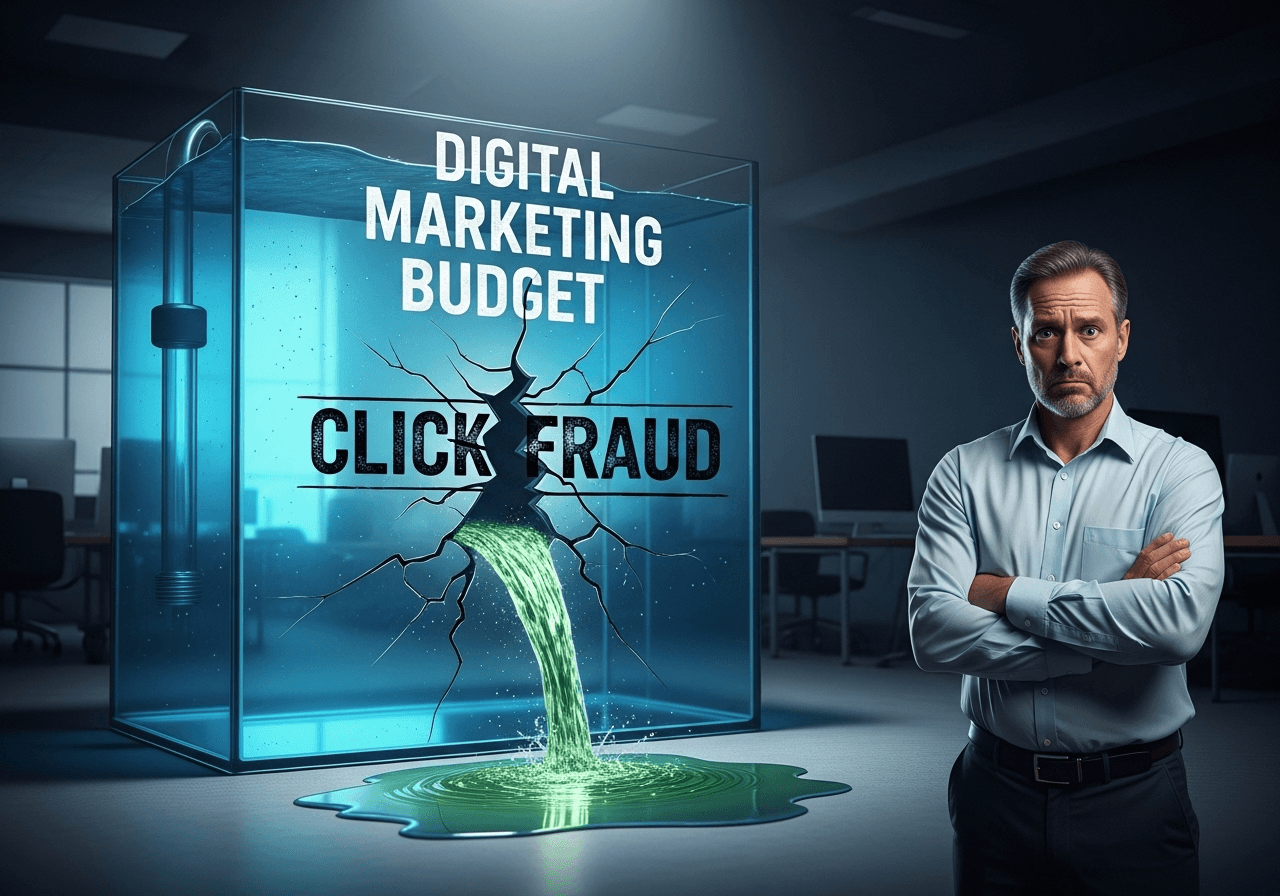
In the competitive digital landscape, every advertising dollar counts for small and medium-sized enterprises (SMEs). But a silent threat is draining marketing budgets and skewing campaign data: click fraud.
What is Click Fraud and Why Should You Be Worried?
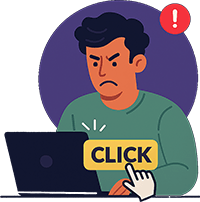
Click fraud is the illegitimate clicking of a pay-per-click (PPC) ad to generate a charge for the advertiser. These clicks have no genuine interest or conversion potential.
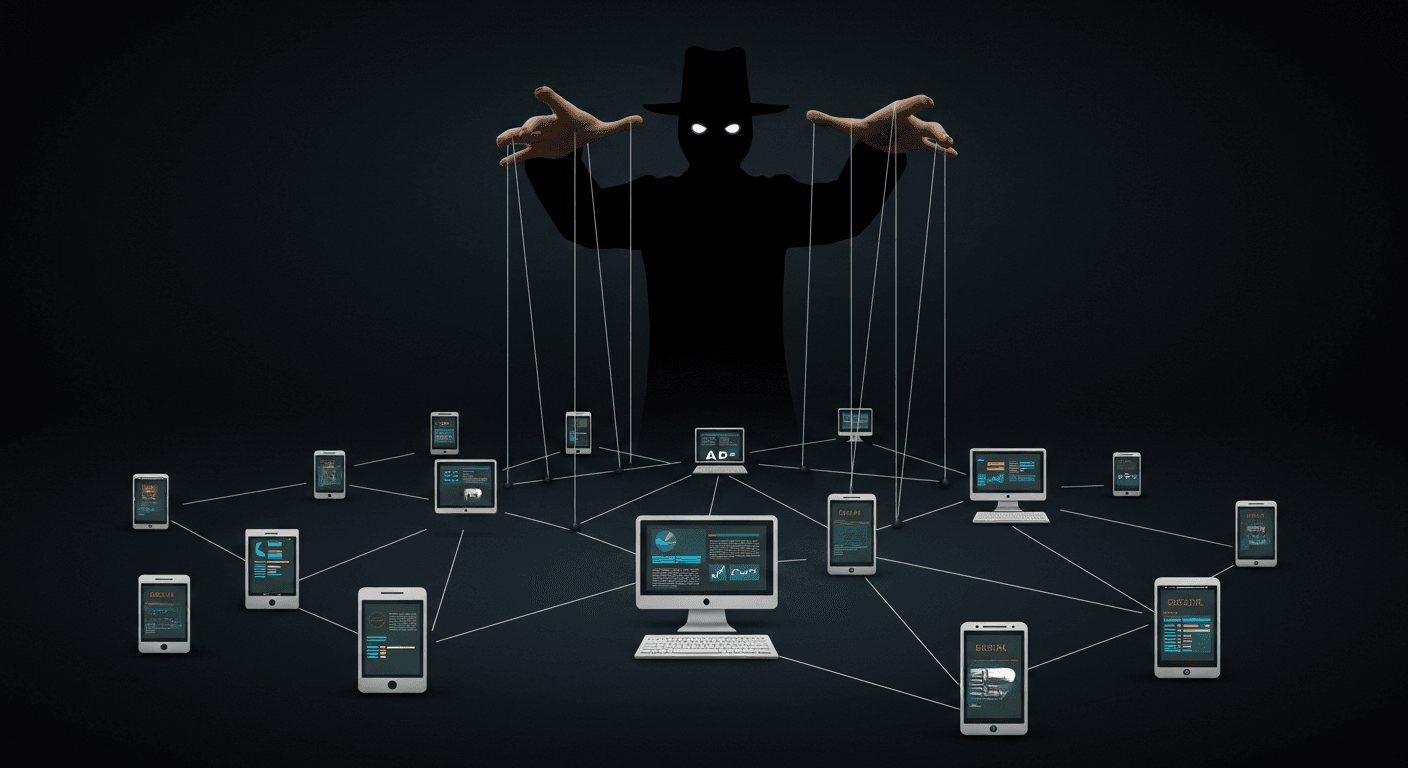
The culprits range from direct competitors trying to exhaust your budget to sophisticated automated bots and organized "click farms."
The scale of the problem is staggering. Statistics show that click fraud impacts businesses of all sizes, with some estimates suggesting that nearly one in five clicks on PPC ads can be fraudulent.
For an SME, this can translate into thousands of dollars in wasted ad spend annually, skewed performance data, and missed opportunities to reach real customers.
Costs of Ineffective Click Fraud Protection
Fraudulent clicks inflate your click-through rates (CTRs) and skew your conversion metrics, making it impossible to accurately assess campaign performance. You might end up pausing a potentially great campaign or investing more in a fraudulent one.
Ad platforms like Google use engagement metrics to calculate your Quality Score. High bounce rates from fraudulent traffic can lower your score, leading to higher ad costs and lower ad positions.
Every dollar spent on a fraudulent click is a dollar not spent on reaching a potential customer.
The SME Click Fraud Self-Audit
| The 3-Minute SME Audit | Before deploying advanced tools, small business owners should audit their Google Ads dashboard for these three 'SME Red Flags |
| The 'Midnight Surge | If you see massive spikes in clicks between 1 AM and 5 AM with zero conversions, you are likely being hit by automated botnets, not late-night customers. |
| The 'One-Second Bounce | If you see a cluster of clicks with a session duration of less than one second, those are bots—not humans. |
| Geographic Mismatch | If you are a local plumber in London, but 10% of your clicks originate from data centers in Virginia (USA), you are paying for 'ghost' traffic. |

When the Competition Plays Dirty: Competitor Click Fraud
While global botnets are a threat, many SMEs face a more personal enemy: Competitor Click Fraud. In local service industries like Law, HVAC, or Locksmithing, CPCs (Cost-Per-Click) can exceed $50. A malicious competitor clicking your ad just five times a morning can exhaust your daily $250 budget before your shop even opens. This 'Budget Sniping' is a tactic used to push rivals out of the top auction spots. Unlike bots, these clicks often come from residential IPs, making them invisible to Google’s basic filters. ClickSambo uses Behavioral Biometrics to identify the repetitive, non-converting patterns of competitor attacks, preserving your budget for real leads.
A Proactive Strategy for SME Click Fraud Protection
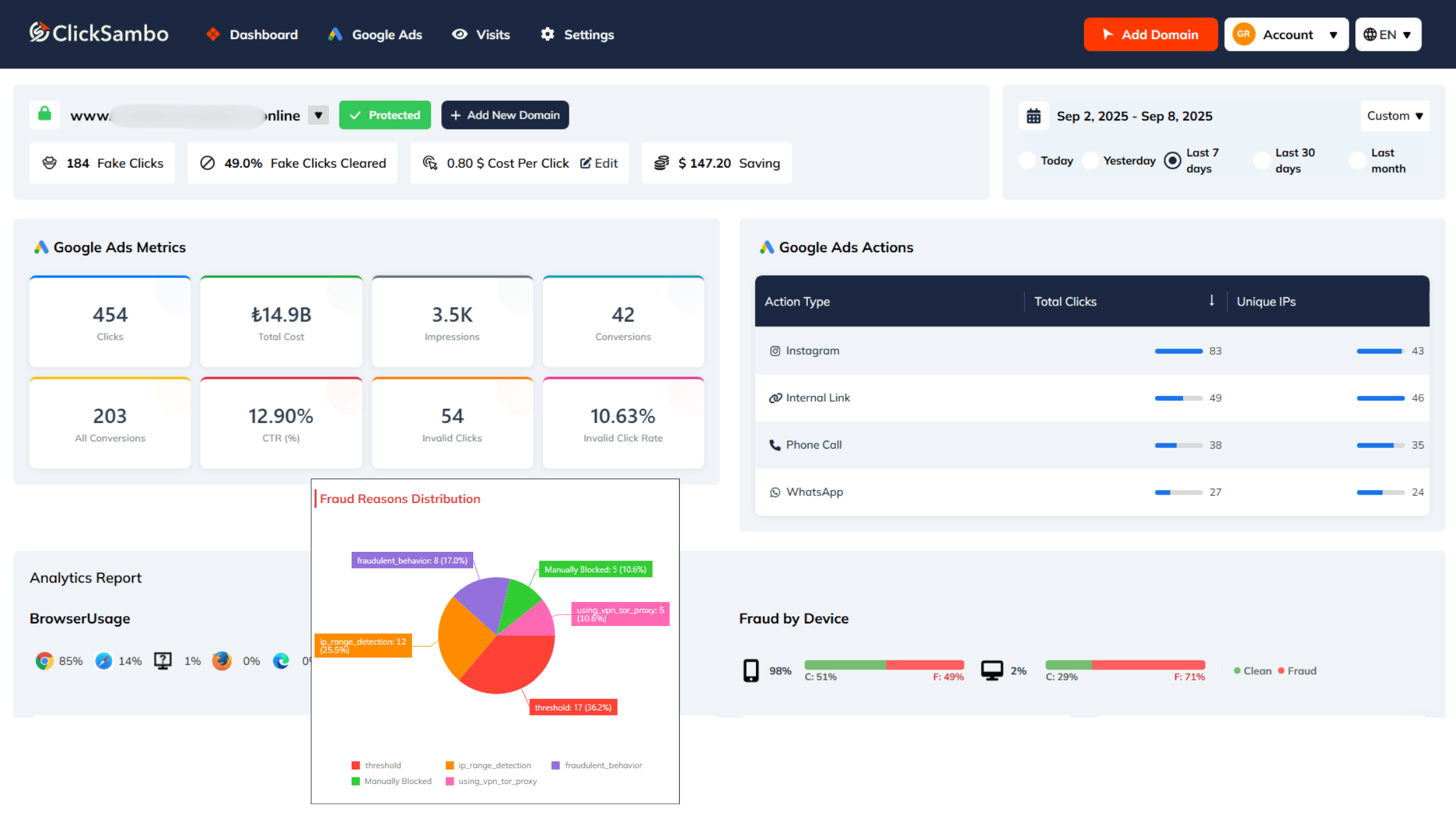
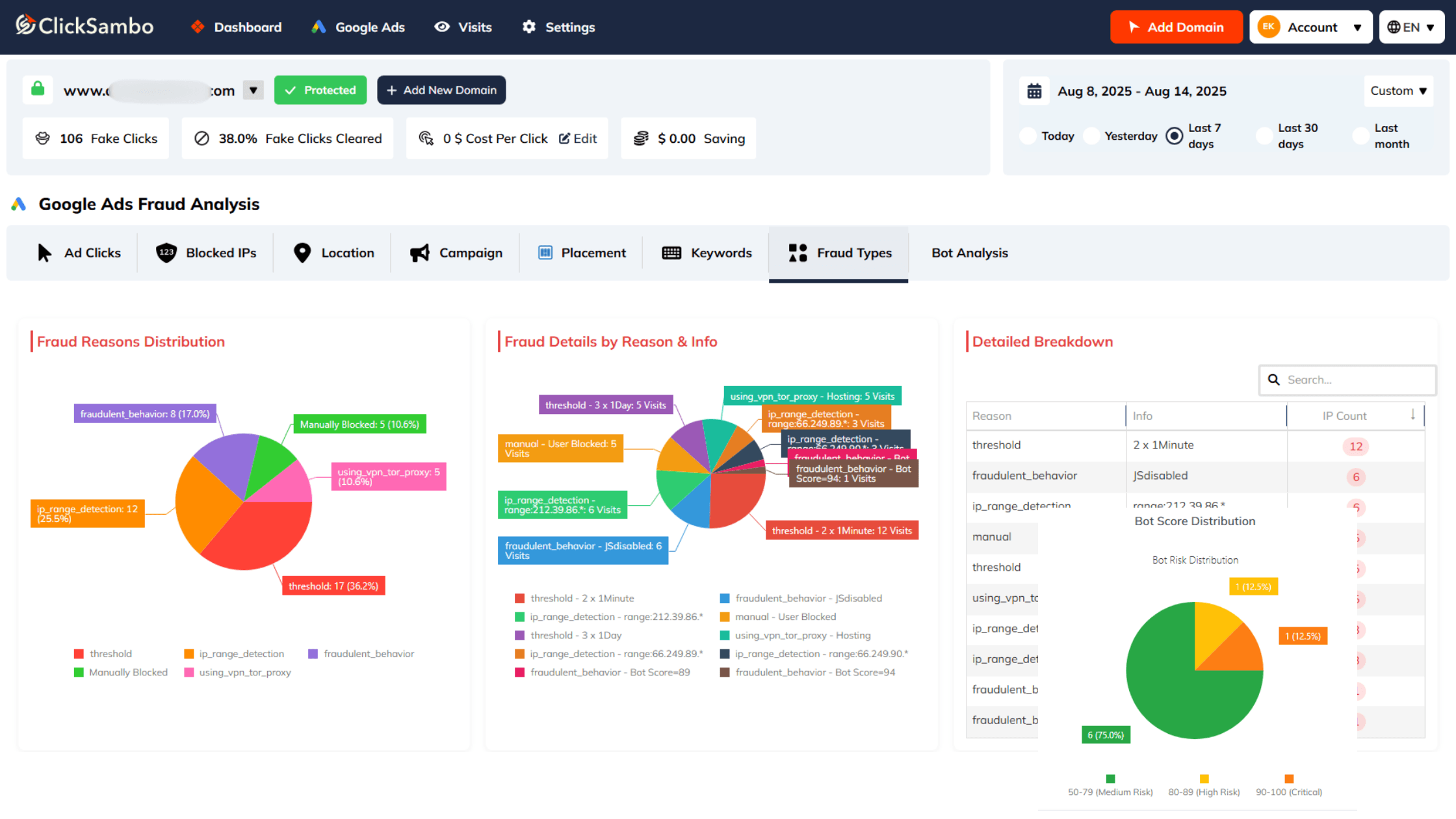
You can't fight what you can't see. ClickSambo starts by bringing all your critical data into one place, allowing you to spot anomalies instantly. From a single screen, you can see both your Google Ads metrics (Clicks, Cost) and the real actions visitors take (Phone Call, WhatsApp). This holistic view makes it easy to see when high click costs don't translate into real customer engagement—the first red flag of fraud
Automate Your Defense with Advanced Blocking
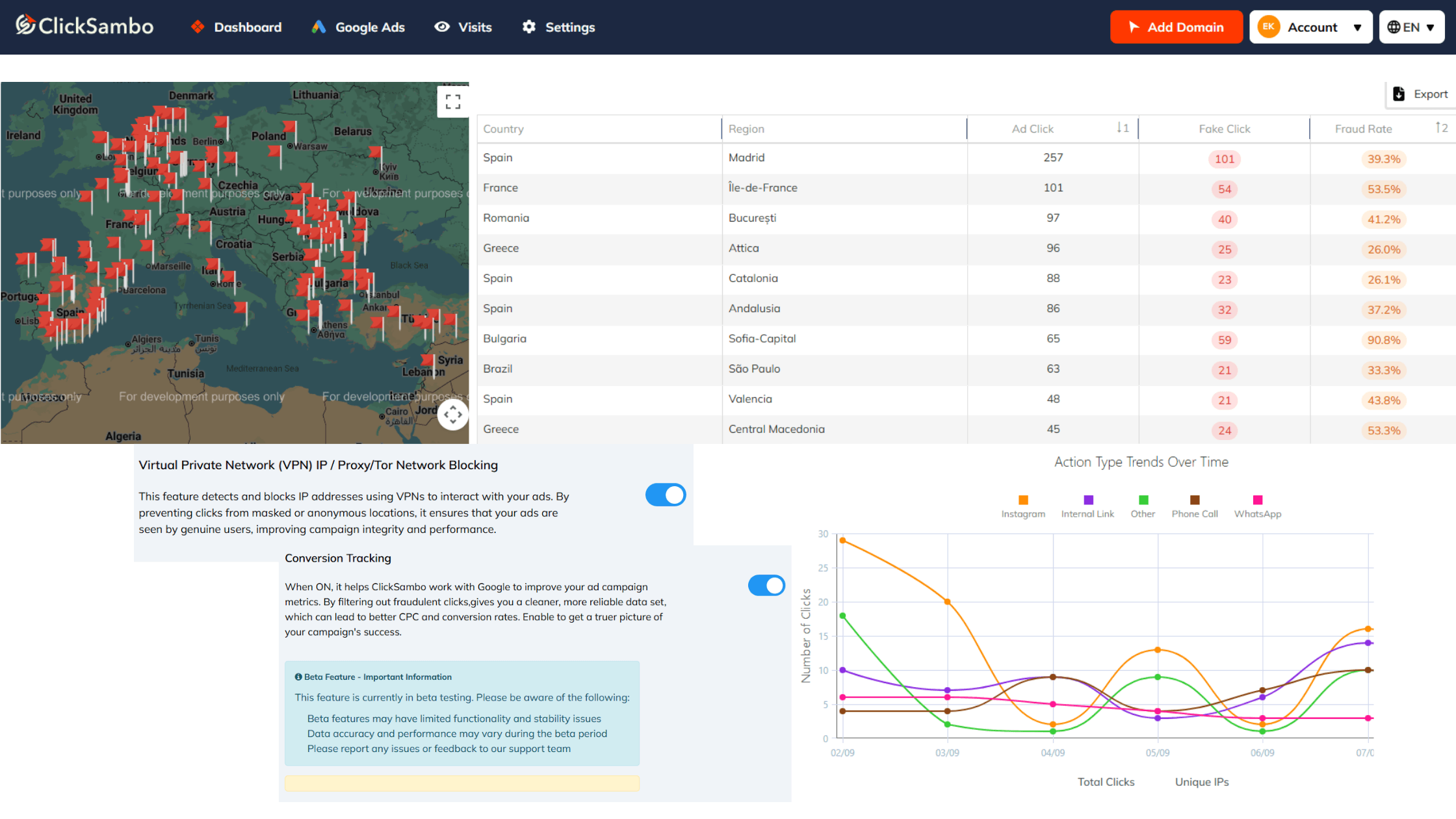
Instantly identify and block fraudulent IPs at the account level. Go a step further by proactively blocking entire IP ranges known for suspicious activity, neutralizing entire bot networks before they can even make the first click.
Automatically block traffic from anonymous networks, a common tool for fraudsters trying to hide their identity.
Conversion Optimization is a game-changer. By sending data on fraudulent clicks back to Google's API as a negative conversion, ClickSambo helps "teach" Google's algorithm to stop showing your ads to bad actors in the first place, providing a long-term solution to the problem.
How We Protect Your Budget?
Achieving such dramatic results requires a smart, automated, and multi-layered strategy. Here’s a look inside how ClickSambo actively protects your campaigns 24/7
Our system doesn't wait for weekly reports. Every single click on your ad is analyzed in microseconds against dozens of data points—IP reputation, device fingerprints, user behavior, network type, and more. We instantly identify and block clicks from known botnets, data centers, and other sources of fraudulent activity before they can waste a single cent of your budget.

SME Budget Drain
27% of PPC Spend
Non-Human Traffic
42% Bot Presence
Global Financial Risk
$114B Total Loss
The ROI Multiplier
2x Conversion RateYou don't need a million-dollar budget to stop fraudsters. Get effective, affordable protection.
 Start SMB Shield
Frequently asked questions
Yes. In high-CPC industries like Law or Locksmithing, clicks can cost $50+. A competitor clicking just five times between 8:00 AM and 8:05 AM can spend $250. ClickSambo detects the "Click Velocity" and device fingerprints of such attacks, blocking that competitor's IP before they hit your budget twice.
This is the classic sign of a Botnet or Click Farm. Bots are programmed to visit your site to make the click look "valid" to the ad network, but they cannot perform human actions like WhatsApp messages or phone calls. ClickSambo bridges this gap by cross-referencing click data with actual engagement.
Very rarely in the SME world. Most legitimate local customers browse from standard residential or mobile networks. Fraudsters, however, almost exclusively use VPNs/Proxies to hide their location.
When ClickSambo identifies a bot, it sends a signal to Google Ads saying: "Ignore this user." Over time, Google’s AI learns that these profiles are "low value" and stops showing your ads to them, lowering your overall CPA (Cost Per Acquisition).




 Other
Other