
 Features
  Industry Verticals
  Customer Segments
  Fraud Types
  Resource
 About
About  Legal
Legal Support

 Özgül Yavuz Kaddoura
Updated Date:
Click Farms: A Deep Dive into the Fraud Industry
What are Click Farms? (The "Who")
A click farm is an organized operation where low-paid workers or automated scripts are hired to click on ads, acting as a Google Ads Click Farm or generating fake social engagement, or create fake accounts in bulk.
The Evolution: From Sweatshops to Software
Initially, click farms were physical locations—often in developing nations with low labor costs like India, Bangladesh, and the Philippines. Workers sat in front of walls of smartphones, manually clicking ads (often operating as a primitive Google Ads Click Farm) or liking posts for pennies a day.
Today, the industry has evolved. Modern operations use sophisticated Click Farm Software to leverage an Ad Fraud Botnet, proxy servers, and emulators to mimic human behavior, creating Sophisticated Invalid Traffic on a massive scale. A single computer running Click Farm Software can now simulate thousands.
The most dangerous operations now use a blend of human intelligence and bot efficiency. Humans solve CAPTCHAs or perform complex actions, while an Ad Fraud Botnet handles the repetitive volume, making detection of this Sophisticated Invalid Traffic incredibly challenging for standard firewalls.
The Evolution of Click Farms: From Manual to Automated

Initially, click farms were rudimentary operations consisting of numerous low-wage workers manually clicking ads on a multitude of devices. These manual farms were typically located in developing nations with low labor costs, including countries in Southeast Asia (Thailand, India, Bangladesh, Pakistan), parts of Africa, Eastern Europe, and some regions in South America.)
These workers, often earning a pittance per click, would spend hours clicking ads, liking posts, or leaving comments on social media, generating fake engagement.
However, the industry has evolved. Modern click farms have shifted towards automation, leveraging advanced Click Farm Software, botnets and proxy servers to mimic human behavior more effectively. This automation dramatically increases scale and efficiency and making detection increasingly challenging. These automated systems can generate tens of thousands of fake accounts on platforms like Instagram, automatically liking, following, and commenting on posts to boost perceived popularity.
While some operations still employ manual labor, many now rely on a hybrid model – combining automated bot farms with human clickers to avoid detection. This blend of human and automated methods makes it difficult for algorithms to identify and filter out fraudulent activity. There has even been a rise of "virtual click farms," where workers scattered around the globe perform tasks remotely via online platforms.
Key Players and Geographic Distribution

The heart of the click farm industry remains in developing nations. Low labor costs, readily available internet access, and often lax regulations make these regions attractive locations. Countries consistently identified as key players include:
| India | A large pool of inexpensive labor combined with a significant online presence makes India a major hub for Google Ads Click Farm operations. |
| China | Despite stricter regulations in recent years, China continues to be a significant player, often leveraging its advanced technology infrastructure for operating click farms |
| Bangladesh | Similar to India, Bangladesh offers a large, low-cost workforce, making it a desirable location. |
| Philippines | The Philippines has also emerged as a notable location for click farm activities. |
| Other Countries | Numerous other developing countries in Southeast Asia, Africa, and parts of Latin America also contribute to the overall click farm landscape. Eastern European countries have also been implicated. |
The anonymity afforded by the internet facilitates these operations, often making it extremely difficult to identify the perpetrators and hold them accountable. The operations often operate as complex, decentralized networks, further complicating enforcement efforts.
Why Do Click Farms Exist? (The "Why")
Fraudsters don't just click for fun; they do it for profit. The motivations generally fall into three dangerous categories:
Unethical businesses hires botnets to repeatedly click on a competitor's campaigns. This drains the victim's daily budget early in the day, removing their ads from search results and allowing the attacker to capture the market share.
Influencers or businesses purchase "likes," "follows," and "comments" to appear more popular or credible than they actually are.
Fraudsters create low-quality websites (Made-for-Advertising sites) and use click farms to click on the banner ads hosted there, stealing payouts from advertising networks.
How to Spot the Attack?
| Unusual Spikes | Sudden surges in Click-Through Rates (CTR) on your ads but near-zero conversions (a clear sign of Sophisticated Invalid Traffic) |
| Geographic Mismatches | Heavy traffic coming from cities or countries you do not serve. |
| Bounce Rate | Bounce rates near 100% and session durations under 1 second. |
| Repetitive IP Blocks | Suspicious visitors constantly arriving from similar IP ranges (Subnets). |

First Line of Defense
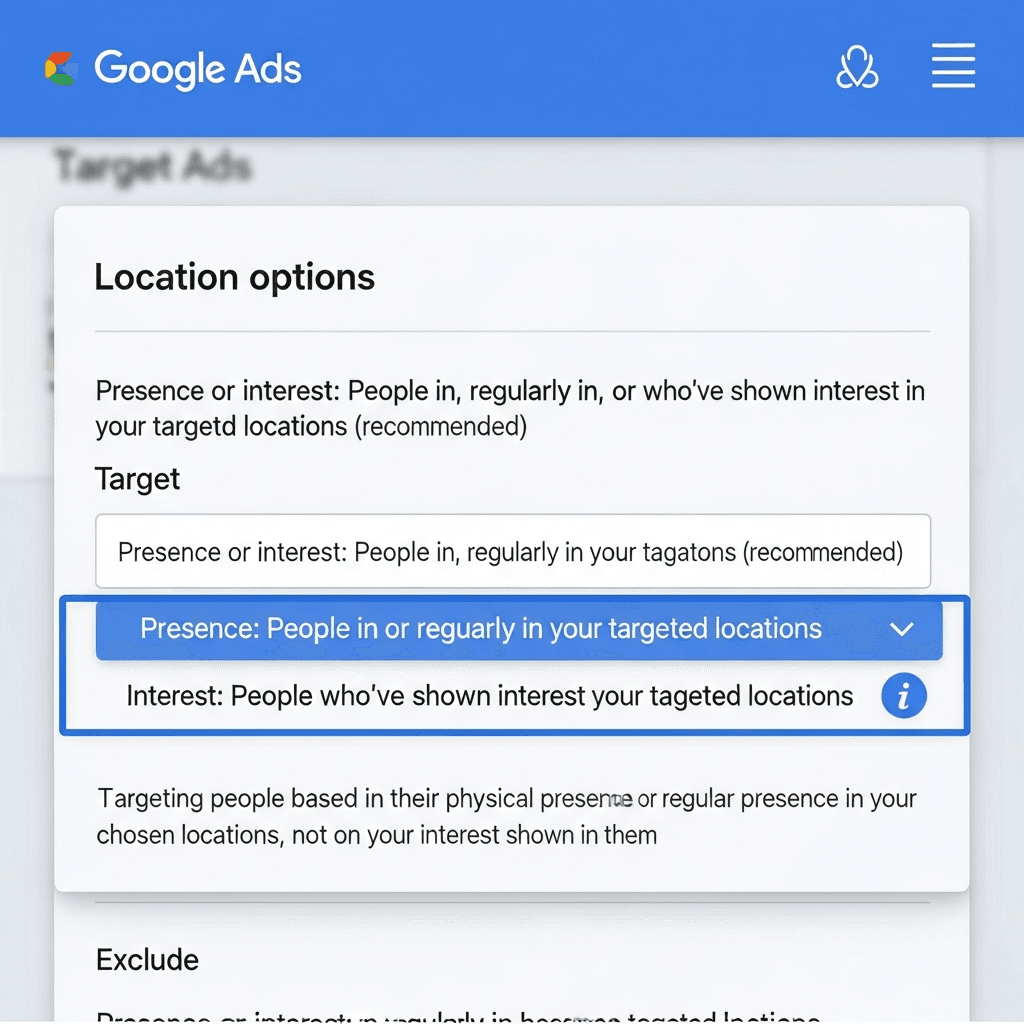
You must select "Presence" (People in or regularly in your targeted locations). The default "Presence or Interest" option allows a click farm on the other side of the world to see your ad just by showing "interest."
Disable the "Google Search Partners" network in your Search campaigns. These networks are often unregulated and a primary playground for targeting unsuspecting advertisers.
Filter out irrelevant traffic by adding non-commercial words like "jobs," "free," or "download" to your negative keyword list.
Beyond IP Blocking: Behavioral Biometrics
Modern click farms can change IP addresses with every single click (using VPNs/Proxies). That is why relying solely on IP blocking is like playing "whack-a-mole." ClickSambo goes beyond the IP to perform Behavioral Analysis:
| Mouse Movements | Human mouse movements are chaotic and curved. Bots move in linear, perfect paths. |
| Device Fingerprinting | Even if the IP changes, the device's hardware characteristics (Screen resolution, battery status, installed fonts) do not change. |
By analyzing these data points, detect even the most advanced Sophisticated Invalid Traffic in milliseconds.


Human-Driven
Organized groups manually clicking ads
Industrial Scale
Large-scale operations coordinated
Global Workforce
Leveraging low-wage labor across regions
Evasion Tactics
Sophisticated methods used to mimicClick farms are evolving using residential proxies. In a recent case, ClickSambo identified a botnet attack and saved an agency's monthly ad spend.
 Read the Full Case Study
Frequently asked questions
A hybrid click farm combines human workers with Click Farm Software. Humans are used to bypass "I am not a robot" tests (CAPTCHAs) and perform complex site interactions, while an Ad Fraud Botnet handles the repetitive clicking at scale. This blend of human and machine behavior makes it nearly impossible for standard firewalls to distinguish from real traffic.
Modern Click Farm Software is integrated with rotating residential proxies and VPNs. This allows the operation to change its IP address with every single click. If you block one IP, the software simply generates a new one. This is why specialized Click Fraud Prevention Software that looks at hardware fingerprints instead of just IPs is necessary.
The goal is "Competitor Sabotage." By hiring a Google Ads Click Farm, a rival can drain your daily budget by 10:00 AM. Once your budget is exhausted, your ads stop showing, allowing the competitor to capture the market share and real customers for the rest of the day.
Yes, indirectly. If a click farm drives a massive amount of sophisticated invalid traffic to your site, your "Bounce Rate" will skyrocket and your "Session Duration" will drop. Search engines may interpret these signals as a sign that your content is low quality, potentially hurting your organic rankings over time.




 Other
Other